Luxury is one of the most overused words in property. It appears in listings, brochures, and headlines, often attached to price tags rather than principles. Over time, the meaning has become blurred. Expensive finishes are mistaken for quality. Bold design is confused with longevity. Marketing language replaces substance.
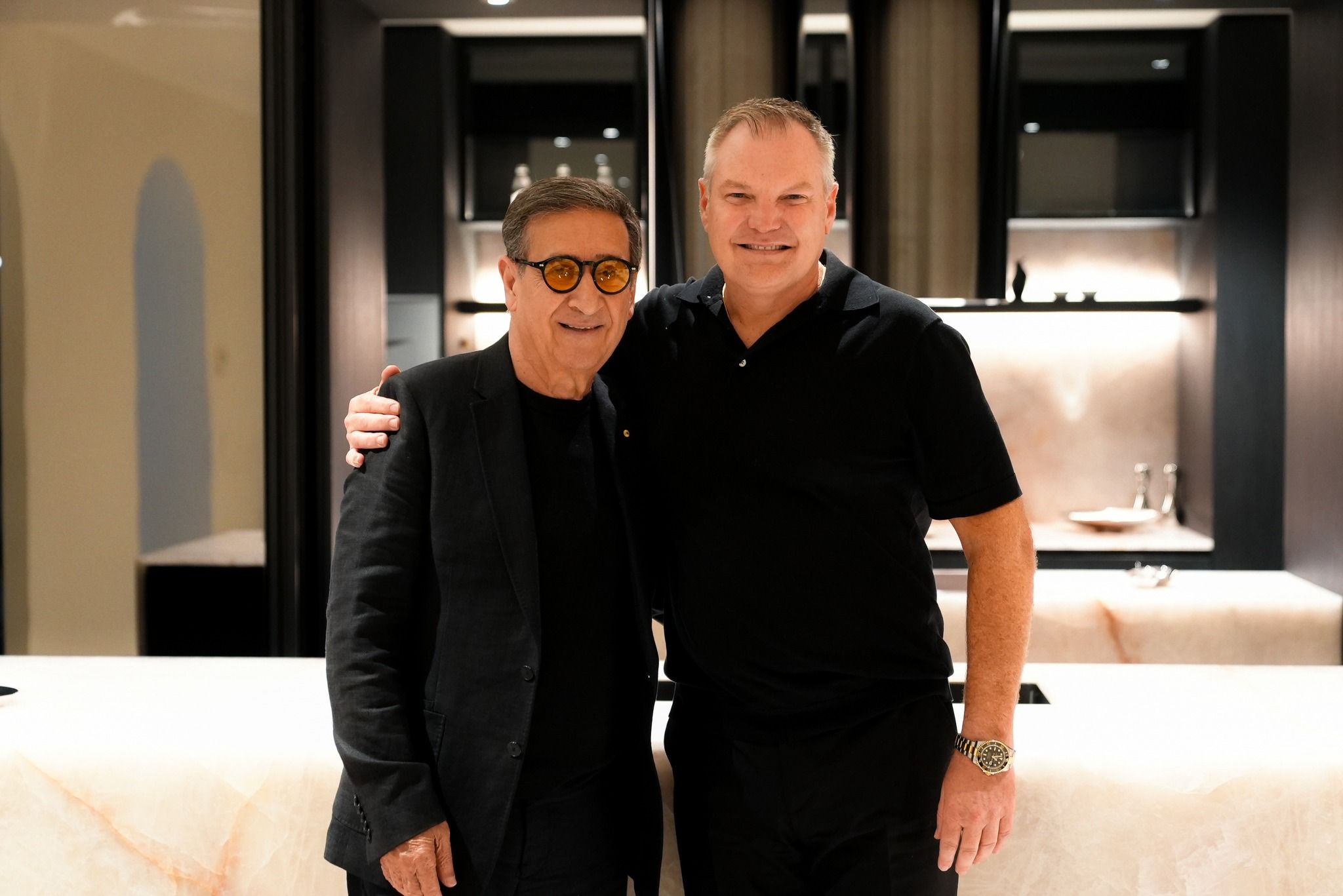
In a recent in-depth interview with our Principal Buyer’s Agent, Joe Pullos, from COAST Buyer’s Agency, legendary developer Soheil Abedian offers a very different perspective on what luxury truly means in property. His insights are not shaped by trends or sales cycles, but by decades of designing, building, and delivering some of the Gold Coast’s most enduring residential projects.
You can watch the full interview with Soheil Abedian here:
Who is Soheil Abedian, and why does his view on luxury matter?
Soheil Abedian of Abedian & Co. is one of Australia’s most influential property developers, a philanthropist, and a recognised figure in shaping not only the Gold Coast skyline but Australian residential development thinking more broadly.
Born in Iran in 1949, Abedian completed a master’s degree in architecture at the University of Graz, Austria, in 1979 before emigrating to Australia in the early 1980s. Soon after arriving, he co-founded the Sunland Group in 1983 with Foad Fathi, beginning with luxury housing and quickly advancing into high-end apartment towers and landmark developments.
His early experience in architectural design profoundly influenced the way he approached property. Where many developers focus first on sales, Abedian’s design background led him to prioritise architecture that supports lived experience.
His developments have included some of the Gold Coast’s most iconic and enduring addresses:
- Palazzo Versace Gold Coast, completed in 2000, was the first fashion-branded hotel in Australia and set a new benchmark for luxury resort living on the coast.
- Q1 Tower, completed in 2005, became the tallest residential building in the southern hemisphere and remains a defining element of the Gold Coast skyline.
- Residential projects such as Circle on Cavill, Lumiere, Aria, Carmel by the Sea, and Avalon have further solidified his reputation for designing environments that blend architectural ambition with functional living.
Abedian’s influence extends beyond built form. His contributions to education and community have been significant. He helped establish the Abedian School of Architecture at Bond University, funded scholarships across both Bond and Griffith universities, and founded the Abedian Foundation, focusing on education and community support.
His service to the property sector and broader Gold Coast community has been recognised through multiple honours, including the Keys to the City of Gold Coast, the Order of Australia Medal, and induction into the Gold Coast Business Hall of Fame.
These achievements and recognitions are not simply ceremonial. They reflect a career built around projects that endure beyond their launch dates, and a belief that architecture and development should contribute to elevating value to people’s lives and their environments.
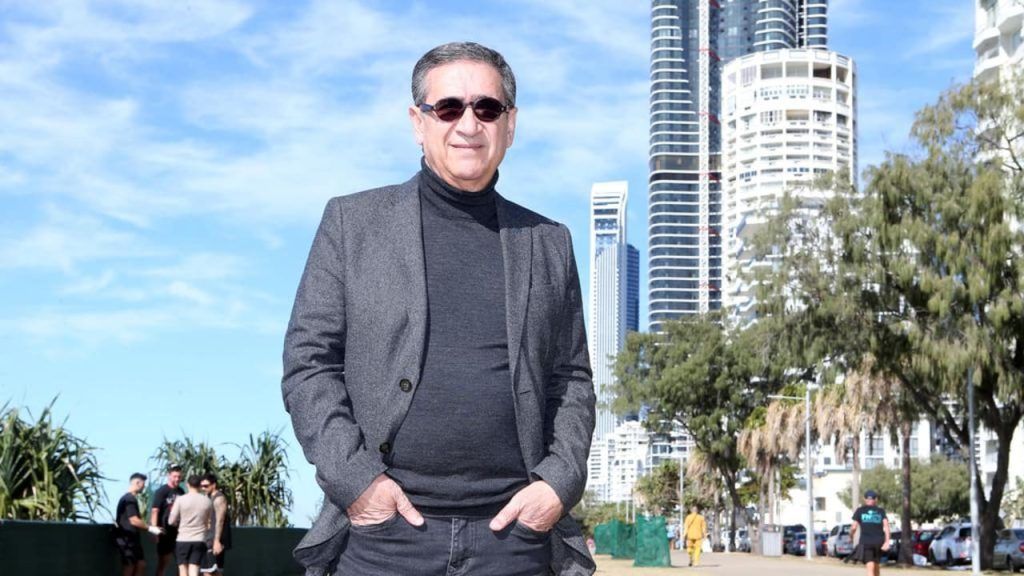
Soheil Abedian on the Gold Coast
Luxury is not a look; it is a philosophy
One of the most consistent themes throughout the interview is Abedian’s insistence that luxury cannot be reduced to visual impact. He challenges the idea that luxury is something you see instantly, or something that can be summarised through finishes, ceiling heights, or styling alone.
In his view, luxury begins with intention. A building must function as a home before it performs as a statement. External architecture and internal experience must work together, rather than compete with one another. When appearance is prioritised over usability, the result may photograph well, but it rarely stands the test of time.
This philosophy reframes luxury as something that is felt gradually. It is experienced through daily routines, long-term comfort, and the way a space supports life rather than interrupts it. As Abedian notes in the interview, a truly luxurious home is one that people are proud to live in, not just proud to show.
The role of craftsmanship and detail
Abedian speaks at length about craftsmanship, particularly the kind that often goes unnoticed. He argues that true luxury lies in the details most occupants never consciously identify, but instinctively respond to.
Seamless transitions, precision finishes, and restrained design all require discipline and skill. Simplicity, when executed properly, is rarely simple to achieve. It demands higher tolerances, better materials, and greater attention to construction methodology.
In the interview, Abedian explains that many decorative elements exist to hide poor workmanship. Skirtings, trims, and embellishments can disguise inconsistencies. When workmanship is excellent, there is nothing to conceal. The building speaks for itself through proportion, balance, and calm.
This is why many of his developments appear understated at first glance, yet feel exceptionally resolved when experienced in person. Luxury, in this sense, is quiet rather than performative.
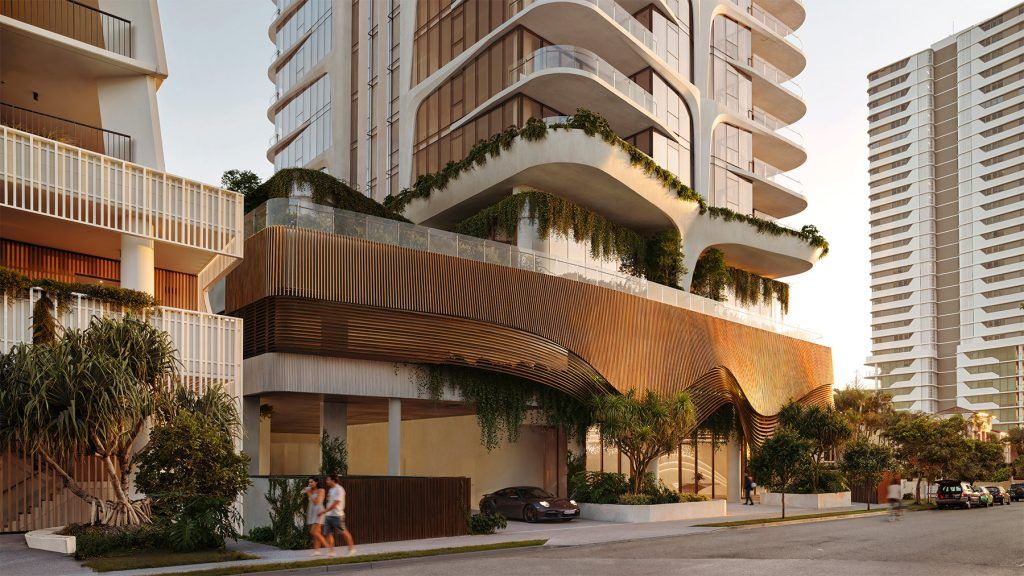
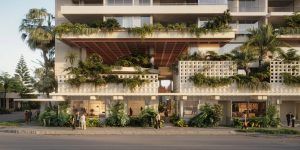
Render of Abedian & Co.’s Peerless 36-storey high-end residential tower – 39 Peerless Avenue, Mermaid Beach QLD
Why the developer behind the project matters
A key takeaway for buyers is Abedian’s emphasis on developer credibility. He encourages buyers to look beyond marketing language and ask a fundamental question. Who is delivering this project, and what have they delivered before?
Property is a long-term commitment. The people behind a development influence everything from material choices to construction standards and post-completion outcomes. A strong developer track record offers insight into how a building will age, how it will be maintained, and how it will perform over time.
In the interview, Abedian draws comparisons to other luxury sectors. Buyers place trust in brands with history because consistency builds confidence. Property operates on the same principle. Legacy matters.
Longevity as the true measure of luxury
Throughout the conversation, Abedian returns to the idea of longevity. He points to early developments that continue to command respect decades after completion. Their success is not the result of trends, but of fundamentals executed properly from the outset.
Design trends evolve. Tastes change. What remains is quality. Buildings that prioritise proportion, layout, material integrity, and human experience tend to age gracefully. Those driven primarily by novelty often require intervention to remain relevant.
What buyers can learn From Abedian’s perspective
Abedian’s definition of luxury offers buyers a useful framework for assessing property, particularly at the higher end of the market.
Instead of focusing solely on finishes, buyers can consider how a space functions day to day. Instead of relying on branding, they can investigate the people behind the project. Instead of asking whether a property feels impressive now, they can ask whether it is likely to feel considered in ten or twenty years.
Other practical considerations emerge from the interview as well. Does the design prioritise livability as much as appearance? Has craftsmanship been applied consistently, including in areas that are not immediately visible? Is the development grounded in experience rather than experimentation?
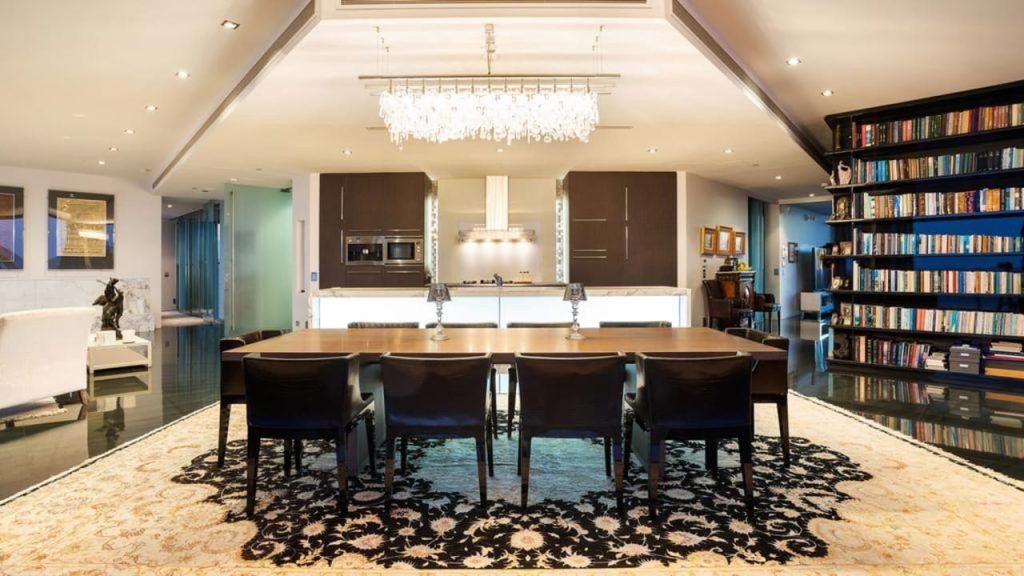
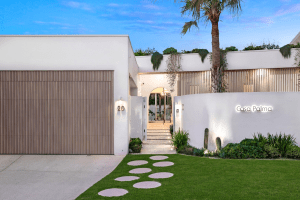
Soheil Abedian’s Lumiere Private Residences Penthouse at 230 Marine Parade, Labrador (Sold 2021)
Redefining luxury for today’s buyers
Luxury in property is often misunderstood. It is not defined by excess, nor by how loudly a building announces itself. As Soheil Abedian makes clear, true luxury is about intention, craftsmanship, and respect for the people who will live within the space.
His perspective encourages buyers to slow down, look deeper, and think long term. When luxury is defined by how a home supports life rather than how it markets itself, better outcomes follow.
COAST Buyer’s Agency extends its thanks to Soheil Abedian for sharing his experience and perspective. We encourage you to watch the full interview with Soheil Abedian to hear his philosophy on luxury property in full.