Gold Coast city has grown into the fastest-expanding economy in the country, and the numbers behind that headline reward a closer look. For investors planning their next move before the end of the year, the question worth answering is whether this growth is structural and durable or simply a good run.
This piece works through the economic picture the way a serious investor would: the scale of the growth, the industries driving it, the jobs it creates, and how all of that flows through to the Gold Coast property market. The figures here come from our recent Gold Coast Property Report 2026, based on data from Gold Coast City Council’s economic reporting, Jobs Queensland forecasts, and the Australian Bureau of Statistics.
The scale of the shift
The Gold Coast generated a Gross Regional Product of $49.4 billion in 2024, landing $775 million above forecast. To put that in context, a single city region now produces close to 10% of Queensland’s entire economic output. The figure carries more weight when you follow its direction of travel. Council’s outlook places the city on track for cumulative GRP growth of 10.07% to 2028, ahead of Greater Brisbane at 9.04% and comfortably above the national average.
Sitting underneath that is annual average economic growth of around 5%, currently the highest of any major economy in Australia. That pace reflects Gold Coast economic growth that has held firm through a period when many regions slowed. A diversified base is a large part of the reason. When one sector softens, others carry the load, which gives the economy a steadiness that single-industry towns rarely manage.
Population is the engine room. Gold Coast population growth continues to run well above the national rate, driven by interstate migration and overseas arrivals choosing the city for lifestyle and opportunity in equal measure. More people mean more households, more spending, and more demand for housing, which is where the macro story starts to directly affect property.
The three industries doing the heavy lifting
Three sectors now anchor the economy:
- Construction leads with $5.04 billion in value added
- Health care follows at $4.5 billion
- Manufacturing contributes $3.15 billion
The most telling development arrived in February 2026, when Council confirmed that tourism has moved out of the top five economic drivers for the first time. For a city long defined by its beaches and theme parks, that marks a genuine turning point. Tourism remains valuable and continues to employ many thousands of people, and the leading roles now belong to industries that build, heal, and make.
Construction’s position at the top reflects both the housing needed to support a growing population and the major projects reshaping the city. Health care’s rise tracks an ageing and expanding population alongside the Gold Coast’s growing reputation as a medical and research hub. Manufacturing, often assumed to be in retreat nationally, is quietly thriving here through advanced and specialised production.
A newer layer sits alongside these three. The knowledge economy, spanning screen, technology, education, and professional services, now contributes $1.4 billion. That figure signals a city adding higher-value, higher-wage work to its mix, the kind of employment that supports stronger household incomes and, in turn, stronger property demand.
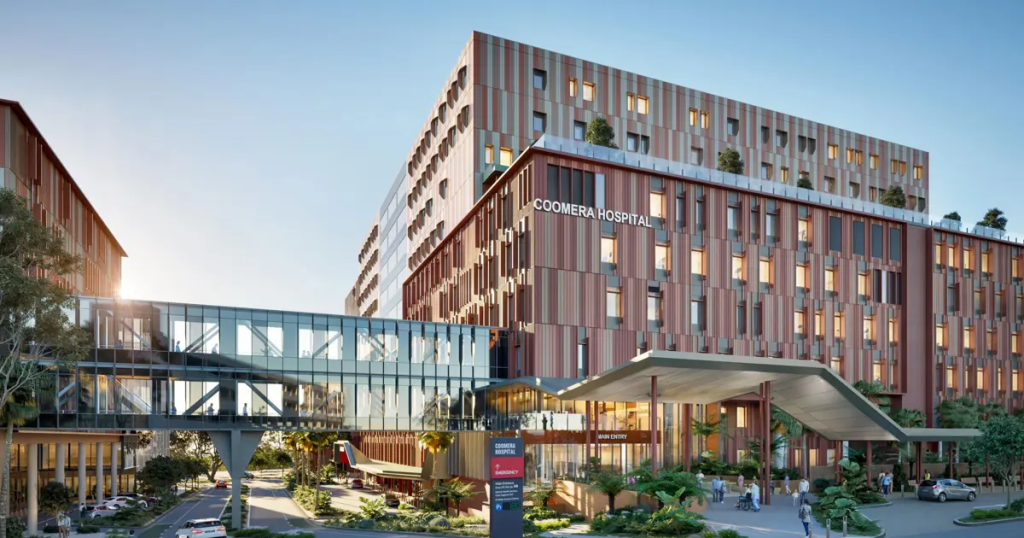
Render of Coomera Hospital currently under construction in 2026
Jobs are where this becomes real
Economic output matters most when it turns into jobs, and the Gold Coast is delivering on that front. Jobs Queensland forecasts 25,300 new jobs for the region, building on Gold Coast jobs growth of 11.9% since 2023. That represents a substantial lift in employment over a short period, and it is concentrated in the same sectors that drive the wider economy.
Unemployment tells a complementary story. The Gold Coast rate sits at 3.5%, below the national figure of 4%.
The city is now home to 80,785 registered businesses, with 736 new registrations in the September 2025 quarter alone. Each new business is a vote of confidence in the local economy and, frequently, a source of new local jobs.
Why an expanding economy drives property
The link between a growing economy and a rising property market is straightforward once you trace it through. Economic growth creates jobs. Jobs draw people. People need somewhere to live. When the supply of new housing takes years to catch up with that demand, prices and rents respond.
The Gold Coast displays every link in that chain at once. Output is climbing, employment is expanding, the population is growing faster than the national average, and new housing remains slow to plan and build. That combination places sustained upward pressure on the Gold Coast property market, particularly in areas close to employment centres and major infrastructure.
The independent view supports it. KPMG forecasts Gold Coast house prices to rise 7.7% across 2026, one of the stronger results among Australian markets.
The infrastructure layer amplifying it all
Infrastructure is where a growth story either accelerates or stalls, and the Gold Coast is investing heavily. A pipeline of around $91 billion in infrastructure is underway or committed across the region, spanning transport, health, education, and the projects tied to upcoming major events.
Gold Coast infrastructure of this scale does two things for property. It improves the places people already live, lifting the appeal and value of established suburbs. It also opens up new corridors, turning previously fringe areas into well-connected, liveable locations. Light rail extensions, upgraded health precincts, and improved road and rail links each tend to reward the suburbs they touch.
For an investor, the infrastructure pipeline reads almost like a map of future demand. Capital tends to flow towards areas where governments and major institutions are investing, because connectivity and amenity are precisely what residents and tenants pay for. Reading that pipeline closely is one of the more reliable ways to anticipate where the next phase of growth will land.
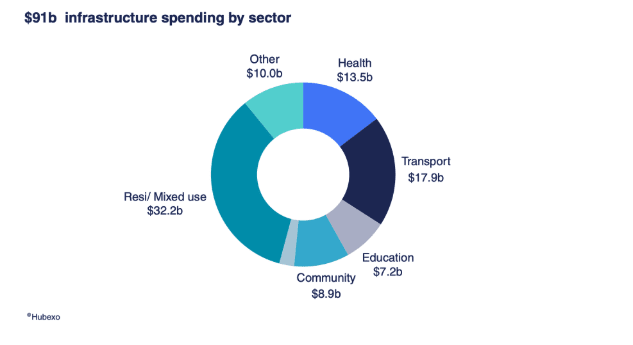
$91B infrastructure spending by sector – Gold Coast 2026 (Sourced from our Gold Coast Property Report 2026)
What this means for where you buy
A strong economy lifts a city as a whole, and within that city the gains rarely spread evenly. The suburbs that perform best are usually those sitting at the intersection of jobs, infrastructure, and population growth.
That points investors towards a few clear principles:
- Areas near the major employment hubs in health, construction, and the knowledge sector stand to benefit from the wage growth and household formation those industries generate.
- Suburbs along confirmed infrastructure corridors, especially transport routes, are positioned to gain as access and amenity improve.
- Locations drawing strong interstate migration tend to combine resilient demand with relative value compared with the established prestige pockets.
Read the full economic and property data together
The economic picture is compelling on its own. The Gold Coast has built the fastest-growing economy in the country on genuine foundations: a $49.4 billion economy, growth running at 5% a year, 25,300 jobs on the way, and a $91 billion infrastructure pipeline reshaping the city. That is a serious case for confidence.
Economic data is only half the picture though. Our 2026 Gold Coast Property Report connects each figure above to the suburb-level property movements they drive, so you can see exactly where growth translates into opportunity.
If you would prefer to talk it through, our buyer’s agents work with this data every day and can map it directly to your goals and budget. Book a free consultation call, and we will walk you through what the numbers mean for your next purchase.