Sydney buyers thinking about the Gold Coast already know the broad story: property is cheaper up here, the weather is better, and many people are making the move. What most of them don’t have is a like-for-like comparison.
What does $1.5 million buy in the Sydney Eastern Suburbs right now, and what does the same money buy in Mermaid Beach? What about the Lower North Shore versus Burleigh Heads? The Inner West versus Robina?
This article answers those questions with real numbers and recent sales data. It also covers what you genuinely gain in the move, what you give up, and where Sydney buyers are actually landing when they relocate to the Gold Coast. If you’re at the research stage of a serious relocation decision, this is the document to start with.
The $1.5M comparison: three suburb pairs
Eastern Beaches: Bondi vs Mermaid Beach
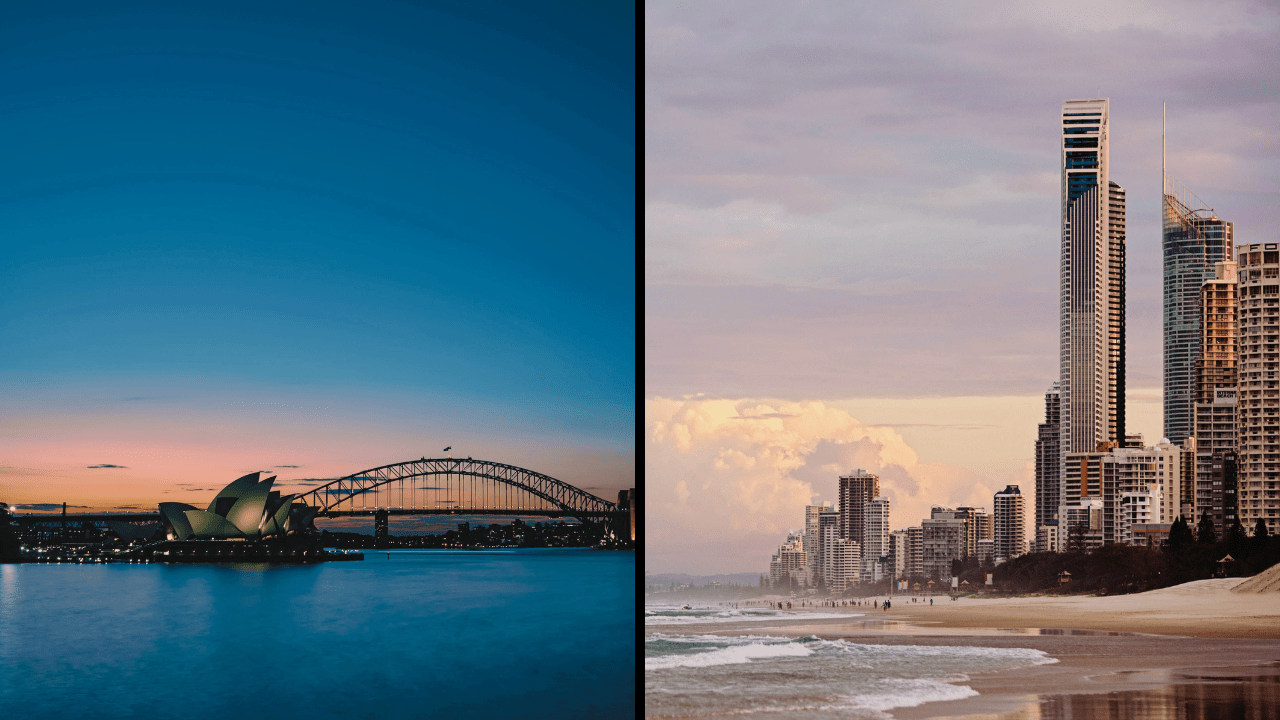
Sydney’s Eastern Suburbs are the most direct comparison point for the Gold Coast’s coastal strip. Both markets are driven by beach access, lifestyle demand, and supply scarcity. Both attract high-income buyers. The difference is what $1.5 million actually resolves to on each side.
In Bondi Beach in 2025–26, the unit budget is $1.5 million. The median house price in Bondi currently sits at approximately $4.51 million — meaning a $1.5M buyer is not in the house market at all. At that price point, you’re looking at a two-bedroom unit, likely in an older block, almost certainly without a garage, possibly on a busy road running back from the beach. If the block is in reasonable condition and has some aspect to it, you’ve done well. The median unit price in Bondi is around $1.65 million, so $1.5M is below the median.
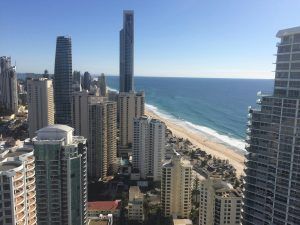
In Mermaid Beach, $1.5 million is a house budget — and a comfortable one. The median house price in Mermaid Beach is approximately $1.46 million, so $1.5M puts you at or just above the median. That’s a three-to-four-bedroom house, typically with a double garage, outdoor entertaining, and, in some streets, a 200–400-metre flat walking distance to the beach. Mermaid Beach is also one of the Gold Coast’s most sought-after coastal markets — and $1.5M buys you genuine participation in it.
The gap: the same budget that buys a below-median unit in Bondi buys an above-median house on the Gold Coast’s premier coastal strip.
Lower North Shore: Neutral Bay / Cremorne vs Burleigh Heads
Lower North Shore Sydney is the comparison market for buyers seeking walkability, café culture, good schools, and relative proximity to the CBD, without the Inner West density or the Eastern Suburbs premiums. It’s an aspirational market for professional families.
In Neutral Bay or Cremorne, $1.5 million in 2026 buys a two-bedroom apartment, a smaller three-bedroom in a dated block, or a very narrow terrace requiring significant cosmetic work. House prices in this precinct regularly exceed $3 million for anything with a yard. At $1.5M, you’re not a house buyer.
In Burleigh Heads, $1.5 million buys you a three-to-four-bedroom house in one of the Gold Coast’s most in-demand lifestyle suburbs. Burleigh has a walkable village strip, the beach, strong café culture, and a sense of place that newer Gold Coast suburbs lack. The suburb’s five-year capital growth CAGR is 8.6% in our 2026 Property Report, indicating the asset you’re buying has historically appreciated well. Days on market in Burleigh run around 17 days, which tells you how quickly the market clears when comparable stock comes up.
The gap: on the Lower North Shore, $1.5M is firmly in apartment territory. In Burleigh Heads, it’s a house in a suburb that Sydney buyers frequently cite as their first choice when they arrive.
Inner West: Leichhardt / Marrickville vs Robina
The Inner West comparison is for buyers who are less focused on the beach and more focused on lifestyle amenity, good value relative to Sydney’s coastal and prestige markets, and proximity to employment and schools.
In Leichhardt or Marrickville, $1.5 million in 2026 buys a terrace or semi-detached house — typically two to three bedrooms, a small rear yard, no garage, and in some cases requiring renovation. These are genuinely liveable properties and represent reasonable value by Sydney standards. But “reasonable value by Sydney standards” is doing a lot of work in that sentence. You’re getting a narrow block in a dense inner-city suburb with no parking.
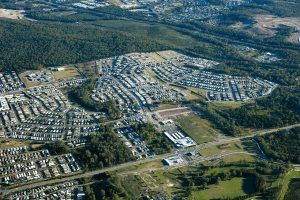
In Robina — the Gold Coast’s most established master-planned community, with direct CBD rail access, three shopping centres, a regional hospital, and a cluster of private and public schools — $1.5 million buys a four-to-five-bedroom family home with double garage, outdoor entertaining area, and often a pool. Robina attracts many Sydney buyers specifically because it translates the Inner West lifestyle logic (good schools, walkability, amenity) into a larger-format property.
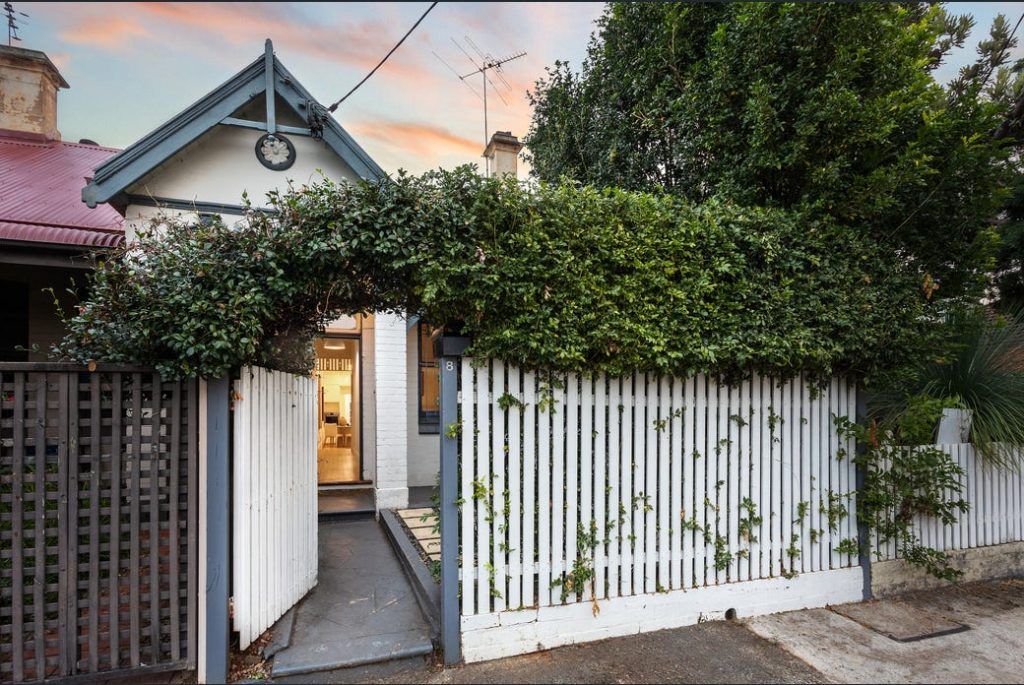
Sydney
8 Llewellyn Street, Marrickville, NSW 2204
- Listed May 2026
- 2 bedrooms
- 1 bath
- No car space
- $1.5M auction guide
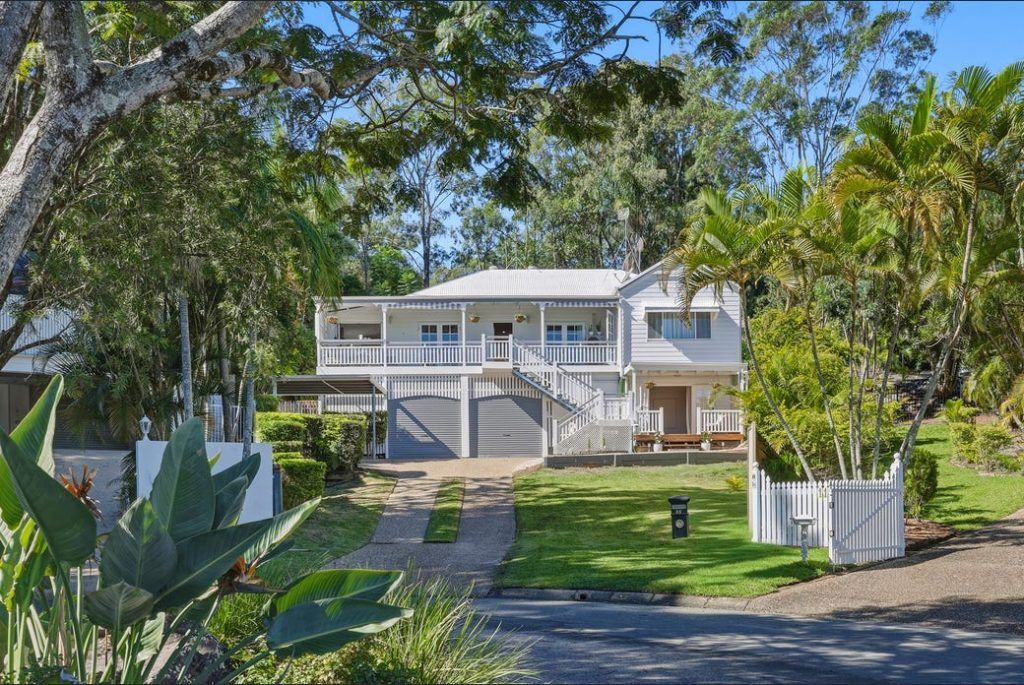
Gold Coast
13 Waitara Place, Robina, Qld 4226
- Listed May 2026
- 4 bedrooms
- 3 bathrooms
- 4 car spaces
- $1.5M auction guide
The price gap by the numbers
The Bondi vs Surfers Paradise comparison from our 2026 Property Report makes the structural price differential concrete.
Market | Median House Price | Median Unit Price |
|---|---|---|
Bondi Beach, Sydney | $4,510,000 | $1,650,000 |
Surfers Paradise, Gold Coast | $1,460,000 | $830,000 |
Difference | $3,050,000 | $820,000 |
A Bondi unit costs almost twice as much as a Surfers Paradise unit. A Bondi house costs more than three times as much.
The broader Gold Coast picture adds another layer: the Gold Coast unit median is now $978,718 — higher than the median unit price in every Australian capital city. This is the detail that the Ray White reporting captured last year, and it’s worth sitting with. The Gold Coast is no longer a discount market in absolute terms. It’s a premium market that still offers dramatic value relative to Sydney specifically, because Sydney’s premiums are so far beyond the national average.
For a Sydney buyer, the question isn’t “is the Gold Coast cheaper than Sydney?” It clearly is, by a wide margin. The more useful question is: what does that margin buy you in practical property terms? The suburb comparisons above answer that directly.
What you gain moving to the Gold Coast
Space.
The most consistent thing we hear from buyers who have made the move is that they weren’t prepared for how much more house they’d have. Double garages, back yards, separate living areas, home offices — these are standard features in Gold Coast family homes at $1.5M, not premium extras.
Weather.
The Gold Coast averages around 300 days of sunshine per year. That’s not marketing copy — it changes how you use your property. Outdoor living areas get used. Pools get used. The design logic of a Gold Coast home assumes you’ll spend time outside, and at $1.5M, you’ll have outdoor space worth using.
Beach access without the premium exhaustion.
In Sydney, beach proximity commands an enormous price premium that has only compressed over the last decade. On the Gold Coast, 57 kilometres of continuous coastline means beach access is available across a much broader price range. You don’t need to pay Bondi prices to be a short drive from the water.
Cash freed up.
A Sydney buyer selling at $2.5M and purchasing at $1.5M on the Gold Coast walks away with $1M in freed-up capital. Some use it to pay down a mortgage entirely. Some invest it. Some simply hold it. The psychological effect of being debt-free or near-debt-free is consistently underestimated in the relocation decision.
No stamp duty if you’re eligible.
Queensland has more favourable stamp duty conditions than NSW for owner-occupiers purchasing at the $1.5M level. Worth confirming with your conveyancer, but it’s a meaningful line item in the comparison.
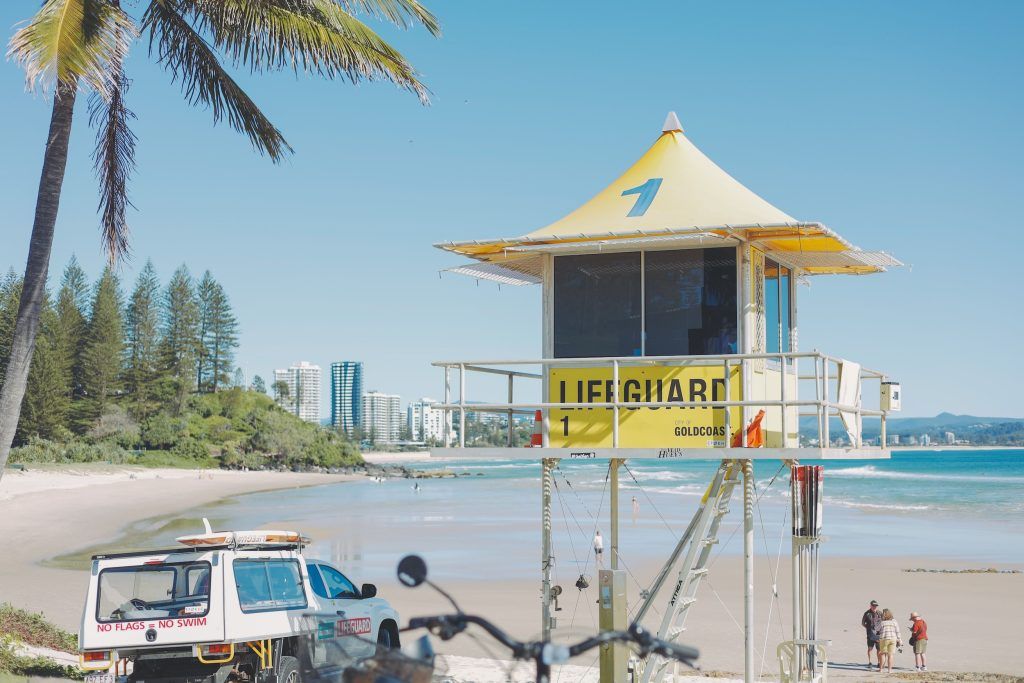
Photo of a lifeguard post at Coolangatta, Gold Coast
What you give up
This article won’t pretend the move is without trade-offs. Being honest about them is more useful than a one-sided pitch.
Direct corporate employment.
The Gold Coast’s economy is growing — healthcare, education, construction, tourism — but Sydney’s CBD employment density is unmatched in Australia. If your income depends on being physically present in a large Sydney CBD firm, relocation changes that calculation. Remote and hybrid work have made this less binary than it was five years ago, but they haven’t made it irrelevant.
Flight connectivity.
The Gold Coast is approximately an hour from Brisbane, and the Gold Coast Airport has direct services to Sydney, Melbourne, and some Asian destinations. But if your work or family requires regular interstate travel, Sydney’s airport frequency and international connectivity are still superior.
The specific Sydney lifestyle.
This is harder to quantify, but real. The density of cultural venues, restaurants, independent retail, live music, and inner-city walkability in Sydney is not replicated on the Gold Coast — at least not at the same scale. Buyers who’ve built their identity around specific Sydney precincts sometimes find the adjustment harder than expected. Burleigh and Broadbeach are genuinely world-class strips, but they’re not equivalent to the Inner West or the Eastern Suburbs in terms of cultural ecosystems.
Some family and friends.
The ones who haven’t made the move yet.
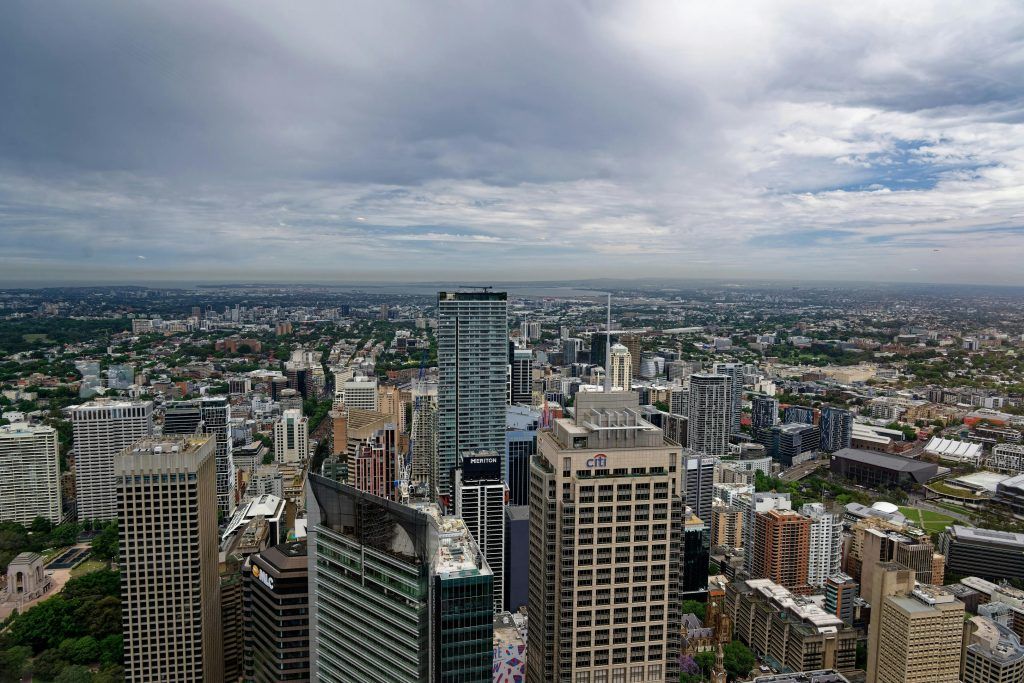
Photo of Sydney CBD – Aerial View
Where Sydney-Siders actually land
Our relocation data shows that NSW accounts for the largest share of interstate migrants to the Gold Coast in recent years. Approximately 420 people per week were moving to the Gold Coast at the time of the last detailed origin-destination data, and NSW buyers consistently represent the dominant interstate cohort.
When Sydney buyers arrive, the most common landing spots by suburb are:
- Burleigh Heads and Burleigh Waters for lifestyle buyers who want the beach village feel
- Robina and Varsity Lakes for families prioritising schools and infrastructure
- Mermaid Beach and Broadbeach Waters for buyers with larger budgets who want to replicate the prestige coastal experience
- Coomera and Upper Coomera for families where space and price are the primary drivers
The pattern is consistent: buyers who’ve done their research tend to avoid the Surfers Paradise unit market (which, while offering strong rental yields, doesn’t suit most owner-occupiers making a permanent lifestyle move) and focus on the southern Gold Coast corridor from Mermaid Beach to Tallebudgera, or the northern growth corridor around Coomera.
The 2026 shift
Something has changed in the last 18 months that matters for this decision.
Gold Coast prices are no longer being driven primarily by pandemic-era migration. The market has absorbed that wave and found a new base. The buyers driving current demand are making deliberate, researched decisions — not reactive escapes from lockdowns. They’re selling Sydney properties at peak or near-peak prices, arriving with genuine equity, and buying with a long-term horizon.
The consequence for Gold Coast pricing is that the discount to Sydney is narrowing from the bottom up. Gold Coast prestige property has re-rated. The unit market median is now above every capital city. Mermaid Beach houses recorded 32% growth in a single year.
For a Sydney buyer, this creates both urgency and perspective. The urgency: the arbitrage opportunity that existed in 2020–2022 has partially closed. Waiting doesn’t necessarily mean a better entry point. The perspective: Sydney prices aren’t falling either, and the structural gap between what $1.5M buys in each market remains enormous and is unlikely to close completely in any reasonable timeframe.
The buyers who’ve made the move and bought well haven’t regretted the timing. The ones who’ve waited have generally paid more than they would have two years ago.
Making the move: next steps
The gap between knowing you want to move and actually buying well is where most Sydney buyers lose time and confidence. The Gold Coast is a bigger, more varied market than it appears from the outside — median price data is a starting point, but it doesn’t tell you which streets flood, which body corporates are poorly managed, which suburbs have significant development pipeline risk, or which properties are priced correctly versus overcooked.
Our 2026 COAST Property Report is the due diligence document Sydney buyers should read before they start looking at listings. It covers suburb-by-suburb performance data, rental yield benchmarks, capital growth rankings, and days-on-market analysis across the full Gold Coast market — the kind of structured comparison that makes a suburb shortlist much easier to build.
If you’re further along in the process, a 30-minute relocation strategy call is the fastest way to map your Sydney situation to what’s currently available on the Gold Coast. We regularly work with interstate buyers — our team understands the specific questions Sydney buyers ask because we’ve answered them many times. The conversation is straightforward and obligation-free.
Data sourced from the COAST Buyer’s Agency 2026 Property Report and CoreLogic. Median prices reflect settlements to December 2025. This article is for general information purposes only and does not constitute financial or investment advice.